
Are you ready for a creative revolution that moves faster than a click? 💥
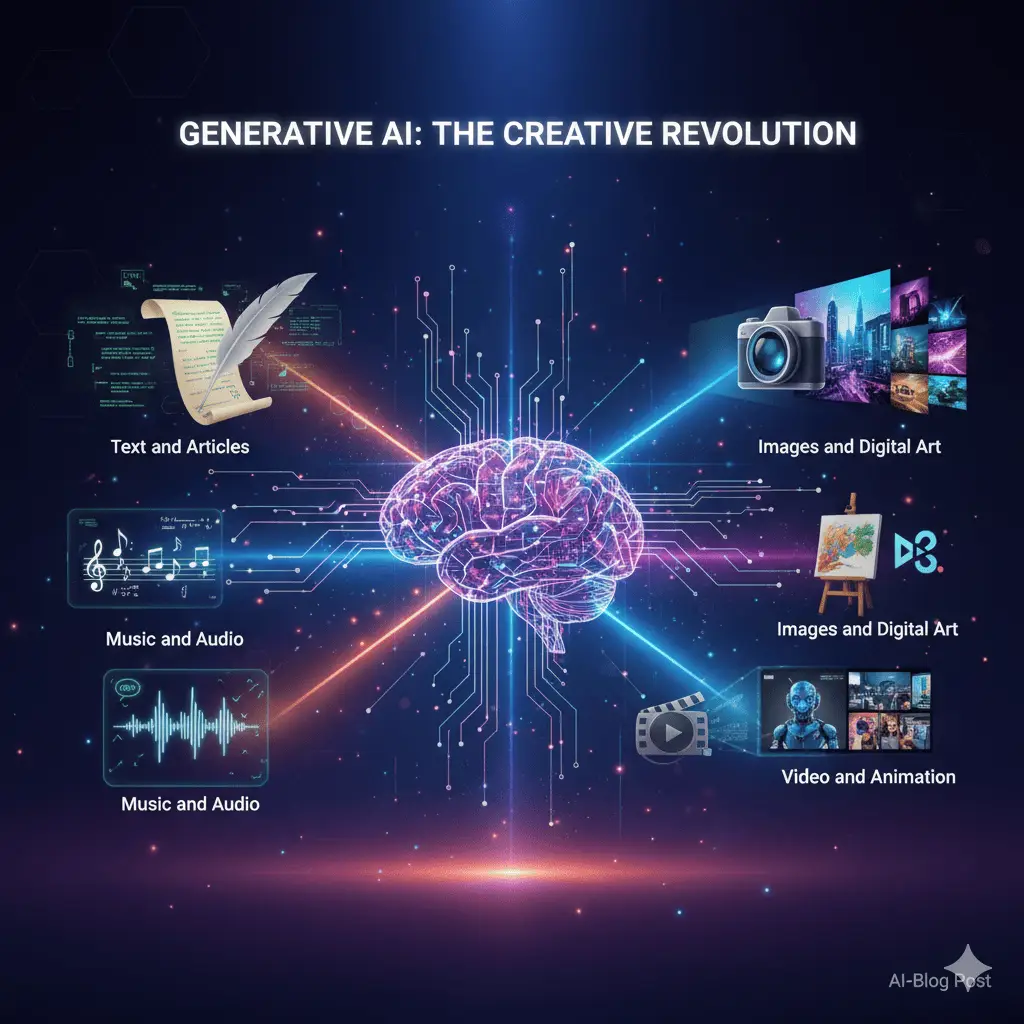
Generative AI is no longer a futuristic concept—it is the engine driving the modern digital economy. In 2026, we have moved past the “experimental” phase. Today, AI is a sophisticated co-creator, capable of producing high-fidelity content across every medium: text, imagery, symphonic music, and cinematic video.
For creators, marketers, and entrepreneurs, understanding this shift isn’t just an advantage; it’s a survival skill. Let’s dive into how Generative AI is reshaping the creative world and what the current trends mean for your brand.
The State of AI: Market Trends and Data (2025–2026) 📊
The growth of the Generative AI sector has been nothing short of explosive. According to recent industry reports:
-
Market Valuation: The global Generative AI market is projected to surpass $200 billion by the end of 2026.
-
Enterprise Adoption: Over 85% of global enterprises have now integrated some form of generative AI into their marketing and content workflows.
-
Efficiency Gains: Content teams using AI-assisted workflows report a 60-70% reduction in production time for high-volume assets.
-
The Shift to Multimodality: 2026 is the year of “True Multimodality,” where models like Gemini 1.5 Pro and GPT-5 seamlessly process and generate across text, audio, and video in a single prompt.
1. Text: From Chatbots to Strategic Partners ✍️
In the early days, AI writing was often “robotic.” Today, Large Language Models (LLMs) have evolved into nuanced storytellers.
-
Hyper-Personalization: AI can now analyze a brand’s entire historical output and generate new content that perfectly mimics its unique “Voice and Tone.”
-
SEO 2.0: Modern AI doesn’t just stuff keywords; it understands Search Intent and Semantic Search, creating articles that provide genuine value while ranking at the top of Google and AI-driven search engines (like SearchGPT).
-
Collaborative Long-form: Writers are using AI to build complex world-building bibles, technical whitepapers, and even full-length novels, where the AI acts as a researcher and structural editor.
2. Images: Beyond Reality 🎨
The gap between AI-generated images and professional photography has effectively closed. Tools like Midjourney v7 and DALL-E 4 have introduced unprecedented control.
-
In-Image Text Rendering: One of the biggest hurdles—rendering legible text inside images—is now a solved problem, making AI a go-to for social media ads and posters.
-
Consistent Characters: Brands can now maintain a single “virtual model” or character across thousands of different generated images, ensuring brand consistency.
-
Commercial Integration: Stock photo platforms have transitioned into “Generative Platforms,” where users describe the photo they need rather than searching for one that already exists.
3. Audio & Music: The Sound of Innovation 🎶
2025 was the breakout year for AI music, and 2026 has refined it into a professional-grade tool.
-
Viral Hits: Platforms like Suno and Udio allow anyone to create radio-quality songs in any genre. We are seeing AI-generated tracks climbing indie charts and being used in major commercial soundtracks.
-
Voice Cloning & Dubbing: AI can now clone a creator’s voice with 99% accuracy, allowing a podcaster to “record” an episode in 20 languages without ever speaking a word of them.
-
Contextual Soundscapes: For video game developers and filmmakers, AI generates adaptive scores that change based on the mood or action of the scene in real-time.
4. Video: The Final Frontier 🎬
Video is the most computationally expensive medium, but the progress made by models like Sora, Kling, and Runway Gen-3 has changed the game.
-
Text-to-Cinema: We are seeing the first high-quality short films produced entirely from text prompts. These models understand physics, lighting, and camera movement better than ever.
-
Virtual Avatars: For corporate training and educational content, AI avatars (like those from Synthesia) are now indistinguishable from real humans, saving thousands in studio and equipment costs.
-
Instant Iteration: Instead of reshooting a scene because a product changed, editors can use “Generative Fill” for video to swap out objects or backgrounds instantly.
The Ethical Landscape: Responsibility in the AI Era ⚖️
With great power comes the need for a reality check. As we move through 2026, several challenges remain:
-
Copyright & Ownership: The legal battle over who owns AI-generated content (and the data used to train it) is ongoing. Brands must stay informed about “Fair Use” regulations.
-
Deepfakes and Trust: The ease of creating realistic content makes “Watermarking” and “Content Credentials” essential. Look for the C2PA standard to become a requirement for digital trust.
-
The Human Touch: The most successful content in 2026 isn’t 100% AI; it’s “AI-Augmented.” Humans provide the strategy, empathy, and final “soul” that makes content resonate.
Conclusion: Embracing the Co-Creation Era
Generative AI isn’t replacing the creator; it is upgrading the human imagination. By automating the “labor” of creation—the typing, the rendering, the editing—it allows us to focus on the “vision.”
The trend for the rest of 2026 is clear: The winners will be those who learn to “prompt” the future, blending human intuition with machine efficiency.
Ready to start your AI journey? The tools are here, the data is clear, and the only limit is your imagination.